joanne Weck Author Page

Friday, March 23, 2018

ARE YOU PRIMED?

Did you know. . . .Amazon Prime members read ebooks for free. Download a book from an author (mine?) and write a review..even a sentence or two.

Did you know. . .  The best thing you can do for your favorite author (besides reading her book) is writing a review on Amazon or Goodreads?
Even though a writer would prefer to sit in her lair and write all day, then kiss her baby and send it out into the world, the truth is, even the most successful writer is forced to be involved in marketing today. I'm attending the LIBERTY STATES FICTION WRITERS CONFERENCE  this weekend, hoping to meet editors, agents and people who love to read as well as write. (Most writers are enthusiastic readers.)  Is it worth it? I'll keep you posted.

9th Annual Liberty States Fiction Writers Conference
Saturday, March 24 thru Sunday, March 25, 2018
at the
Renaissance Woodbridge Hotel
in Iselin, NJ


Sunday, March 4, 2018


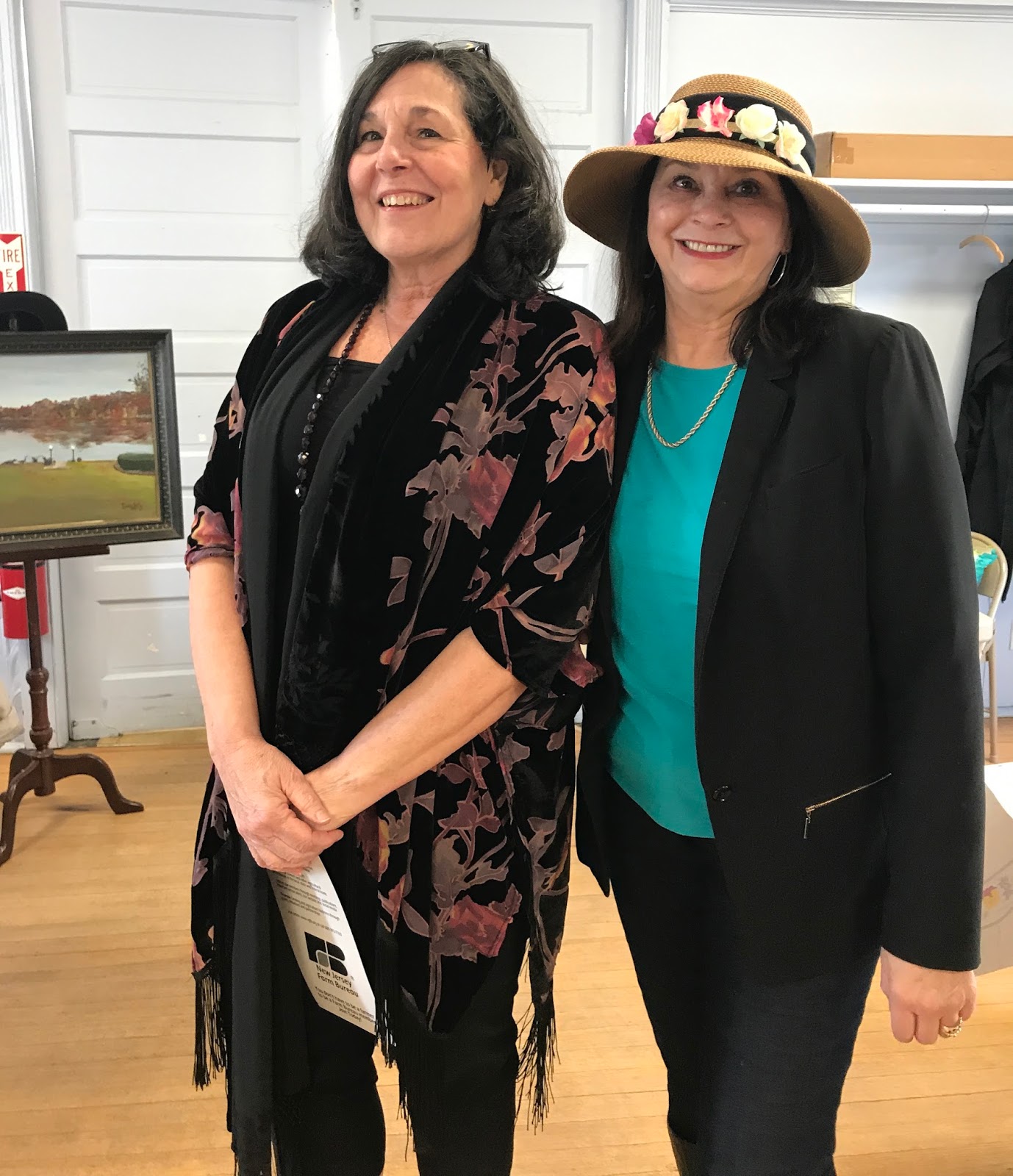
 SISTERS IN CRIME CENTRAL     JERSEY MEETING, MARCH 3  TEA AND INTRIGUE WITH JACKIE SOUDERS, INVESTIGATIVE REPORTER.

JACKIE AND ME
JACKIE WITH KRISTINA RIENZI, PRESIDENT


 WEARING FANCY HATS TO DRINK TEA AND HEAR TRUE STORIES OF MURDER AND CRIME IN NEW JERSEY.


NO ONE WAS MURDERED.
TEA AND GOSSIP WAS ENJOYED.


Thursday, March 1, 2018

REBOOT YOUR BRAIN CREATIVE THERAPY

WRITING FOR YOUR LIFE (AND SANITY)


“Writing is a form of therapy; sometimes I wonder how all those who do not write, compose, or paint can manage to escape the madness, melancholia, the panic and fear which is inherent in a human situation.” ― Graham Greene


Today I'm considering the ways writing for oneself are valuable.
Psychologists and psychiatrists as well as students of human nature agree that simply formulating and penning (or typing) one's thoughts and feelings is therapeutic. The desire to share what has come from your mind is another choice and may have different outcomes, but most writers agree that they write for themselves first.


It starts with this: put your desk in the corner, and every time you sit down there to write, remind yourself why it isn't in the middle of the room. Life isn't a support system for art. It's the other way around. —Stephen King

The aim of art is to represent not the outward appearance of things, but their inward significance. —Aristotle

Did you ever admire an empty-headed writer for his or her mastery of the language? No. So your own winning style must begin with ideas in your head. —Kurt Vonnegut

In short, you have only your emotions to sell. This is the experience of all writers. —F. Scott Fitzgerald

To live a creative life, we must lose our fear of being wrong. —Joseph Chilton Pearce

Writing--and this is the big secret--wants to be written. Writing loves a writer the way God loves a true devotee. Writing will fill your heart if you let it. It will fill your pages and help to fill your life. —Julia Cameron

A written word is the choicest of relics. It is something at once more intimate with us and more universal than any other work of art. It is the work of art nearest to life itself. It may be translated into every language, and not only be read but actually breathed from human lips; not be represented on canvas or in marble only, but be carved out of the breath of life itself. —Henry David Thoreau

I'm sharing these insights today to remind myself of why I write. WRITE ON!

Monday, February 19, 2018

BORROWING. . . OR STEALING? HOW FAR TO GO?


Good writers borrow from other writers. Great writers steal from them outright.  Aaron Sorkin  


How far should a writer go in "borrowing" from others? When does "BORROWING" veer from inspiration to transgression?

 Rewatching Blue Jasmine, Woody Allen's beautifully realized adaptation of Tennessee William's Streetcar Named Desire,  my sense of deja vu was so strong  that  I expected the Stanley character to fall on his knees at any moment and bellow "Stella!" 

In the final moments when the Blanche clone sits alone on a park bench mumbling to herself, I anticipated the arrival of white-coated doctors to whom she would murmur, "I've always depended on the kindness of strangers."

I had the same uneasy feeling  and sense of confusion when I recently read The Flight of Jemma Hardy by Margot Livesey, aware suddenly that I was rereading Jane Eyre, albeit in a slightly different time period, with a slightly different setting, and different names.

It's a respected practice to find inspiration in another writer's work, to adapt, or update a great story. The account of the great flood in Gilgamesh was retold in the Old Testament as the story of Noah, and the Bible, itself, has been an inexhaustible treasure trove for character and story. In East of Eden, Steinbeck powerfully updates the story of Cain and Abel and many other stories have been reinterpreted, updated, or re-imagined. Movies famously adapt or reinterpret. Clueless cleverly updates Emma, one of Jane Austin's most beloved novels. What I find unpleasant is the distortion of the writer's original work. I'm sorry, but I find Pride and Prejudice and Zombies  a despicable rip-off.

Still I find myself questioning the legitimacy of adaptations that so completely follow the character development, themes, and plot of the original work. When is it homage and when is it outright theft?

You think about it while I get back to my writing--a novel inspired by WAR AND PEACE.

Thursday, February 15, 2018

performance anxiety (repeat)

Is it Writer's Block--- or Performance Anxiety

What do you do when you feel stymied and just can't write? You sit at your computer and stare off into space. You go into the kitchen and pour out another cup of coffee. You open up your ideas notebook, but nothing appeals. Do you just walk away, go outdoors, turn on TV--or strain your brain to force an idea? What techniques work for you?

As a child I wrote poetry, stories, and plays. As a young adult I sent out my first novel to one prospective publisher and had it rejected. I went into a downward spiral of self doubt and anxiety and didn't write again for a long time. 

Anxiety can cripple your writing process. For years I "prepared" to write, jotting down ideas, organizing my desk, reading articles about developing story ideas and getting published--anything except actually writing. How did I break through my years (actual years) of doubt and procrastination?

I was assigned to teach a class in Creative Writing and found that I needed to put myself in the same position as my students. I undertook the same writing assignments I gave them. I encouraged them to share their work and I began sending my own stories to journals and online magazines. I sent my plays to theaters and --surprise! had them produced.
After my first story was accepted for publication it became much easier.
Still, after twelve published short stories, (four first prize winners in contests) one mystery, and various plays produced, I still have these moments of anxiety and self doubt. Meditation helps. Self hypnosis helps.

Friday, February 2, 2018

GOING TO THE DARK SIDE (REDUX)


EVIL LIVES--TURN ON TH ENEWS, OPEN YOUR LAPTOP, PICK UP A NEWSPAPER.

So it seems appropriate to face this fact, even in fiction. But I'm a mild person who avoids even the most minor conflict in person, who yearns for a world in which armies and bombs and battles are obsolete. 

Yet novels thrive on conflict. Creating characters, especially those whose personality and goals are the very opposite of mine, always presents a challenge. Producing imaginary people who are as memorable as MacBeth or Nurse Ratched, to make them stalk the pages as believable, demands more than imagination. It demands an understanding of the effects of nature and nurture. This is where my education in psychology (the Gestalt Approach) and theater (the Stanislavski Method) become invaluable.

For a self-centered cheater in my novel DOUBLE DECEPTION I employed “the magic if.” How would I feel if I’d been abandoned by my mother at birth, left in the hospital and then adopted by demanding parents who always made me feel I was somehow lacking? If my husband lost interest in me after the birth of our child, and a suave and charming man offered me the reassurance and admiration I needed?

For a brutal criminal I contemplated the psychology of a boy who’d been raised in a series of foster homes, thrown out onto the streets at fourteen and had to make his way on the streets. Offered a "tribe" and a brotherhood of older criminals, wouldn’t it be natural to find satisfaction and success in the gang?

First I consider the forces that combine to create a certain type of individual. Then I search for quirks of personality, physical attributes, manners and morals that contribute to their individuality.I meditate and search my own soul for the emotions I feel and the emotions I suppress and deploy them as appropriate for my characters.

Writing brings into play all of the accumulated knowledge and experiences of one’s life, the ability to walk in another’s shoes, the excitement and pleasure of playing many different roles. In my real life I’m a staid, modest, law abiding, and considerate human being. But on the page I can live an adventure every day as I become a hardened killer, a wily detective, or a femme fatal.

Crimson Ice, Double Deception, Fateful Encounters available on Amazon (see link)

Thursday, February 1, 2018

BAD LOVE--IS IT GOOD FOR YOUR WRITING?


"All love is sweet, given or returned. Common as light is love, and its familiar voice wearies not ever."– Percy Bysshe Shelley

All love? What about bad love? With Valentine's Day, celebrating "LOVE," I'm reflection on how "bad love" figures into good writing.

Many of my novels, short stories, and plays are built around toxic relationships--perhaps because of personal experiences (as well as observation of those of friends and relatives.) I don't mean difficult relationships--I mean truly toxic relationships--where a partner is abusive, addicted, even criminal.

This situation, while tragic in real life, supplies the writer part of my brain with intimate knowledge of the tensions, the suspense, and the dangers of adapting to and/or escaping from such situations. The sensitive person suffers for loss of love, for loss of illusions, and yes even for the loss of truly bad love.

This paradox has been the heart of my mysteries--a woman who somehow has been caught up in a marriage or relationship that has turned deadly--how will she use ingenuity, courage, and physical strength to escape and build a new life? Will she survive (sometimes she doesn't) thrive, find good love? (You can take a journey of suspense as bad love unravels in Crimson Ice and Double Deception.)

https://www.amazon.com/gp/aw/s//ref=mw_dp_a_s?ie=UTF8&i=books&k=Joanne+Weck